
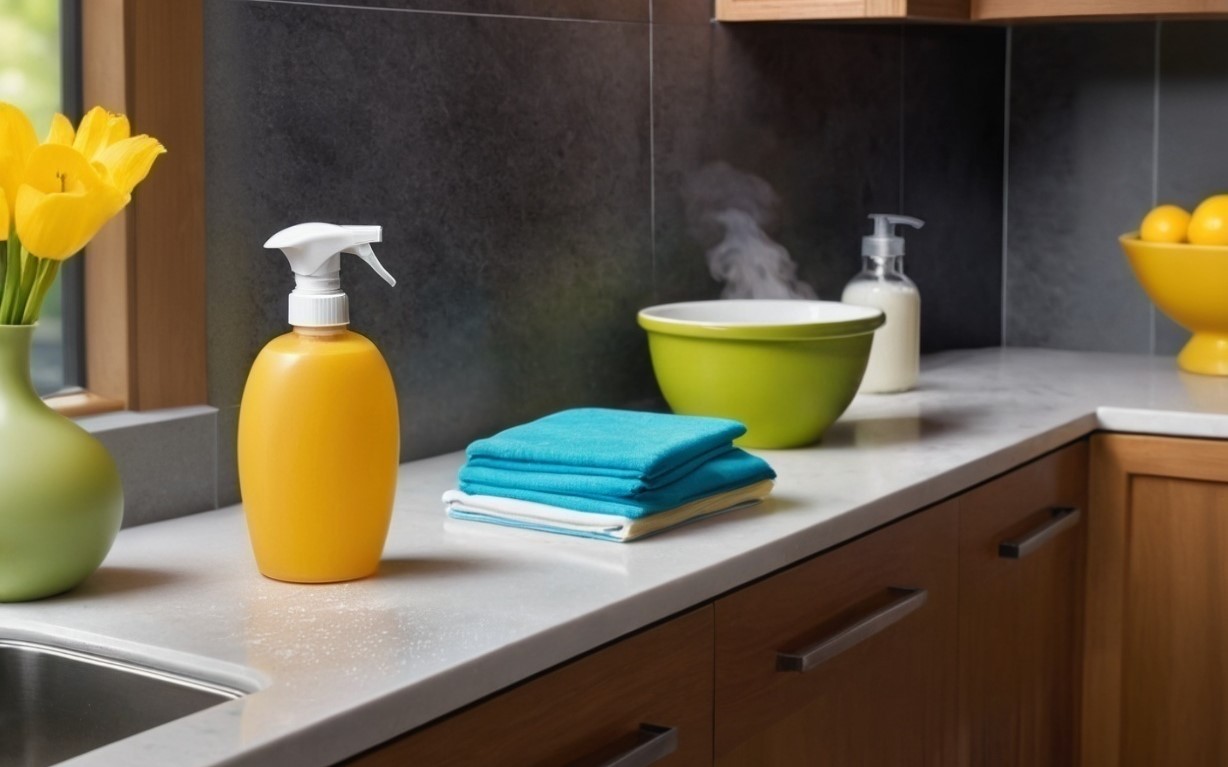
Kitchen cabinets should be wiped or dusted periodically just like all other types of furniture.
When cleaning cabinets, always make sure to use a soft damp cloth, as dry cloths may scratch the stained or painted surfaces. Do not use steel wool or abrasive cloths. Take care not to over-saturate the cloth, as excess moisture may be absorbed by the wood. Also make sure not to use detergents, as well as citrus, ammonia or chlorine based cleaners. If you have stained cabinets, make sure to follow the grain of the wood to minimize the risk of scratches, particularly if the dust contains abrasive particles. When cleaning your appliances, make sure not to spread chemicals to the wooden cabinets as they make break down the finish. Keep your cabinets away from appliances that create excess heat or particulates, take special care around self cleaning ovens, using a hood while cooking or self cleaning will help reduce upkeep. For residues such as oils or smoke, use a solution of warm water mixed with a mild soap, which effectively breaks down contaminants while preserving the integrity of the paint or stain. Using harsh cleaners may damage the finish of your cabinets. Any liquid spills should be cleaned up immediately to keep the wood dry. Remember to use a clean, soft microfiber cloth or an equivalent. You can use a new tooth brush for corners or small crevices, but used sponges should be avoided due to the potential for residual chemicals.
Here’s a list for keeping your kitchen cabinets clean throughout the year:
Quartz countertops are a popular choice for kitchens and bathrooms due to their maintenance free nature. Like any other surface in your home however, they require regular cleaning to keep them looking their best. While quartz is non-porous, clean spills up promptly to prevent staining. A solution of warm water and mild dish soap is effective for removing residues like oils and food particles without damaging the surface. Avoid harsh chemicals, as they can break down the resin finish and compromise the appearance of the quartz over time. For tough stains, a soft sponge or non-abrasive pad can be used, but be cautious with any scrubbers that could scratch the surface. While quartz is heat-resistant, it’s advisable to use trivets or hot pads under pots and pans to prevent any potential thermal shock that may cause cracks or burn marks to appear. Lastly, ensure that any cutting or chopping is done on a cutting board to prevent scratches and maintain the beauty of your quartz countertops.
Avoiding Damage:
While quartz is quite durable, it’s important to protect it from potential damage:
By following these cleaning and maintenance tips, you can keep your quartz countertops looking pristine and enhance the beauty of your kitchen or bathroom for years to come. Enjoy the elegance and durability that quartz offers, knowing that proper care will maintain its stunning appearance!

